Lightning, counted.
Hotter than the Sun’s surface, thinner than your wrist, and loud enough to hear from miles away. Every fact checked against the Met Office, NOAA and NASA, plus a game that teaches you to time the thunder and an eraser called Useless who is hiding under the duvet.
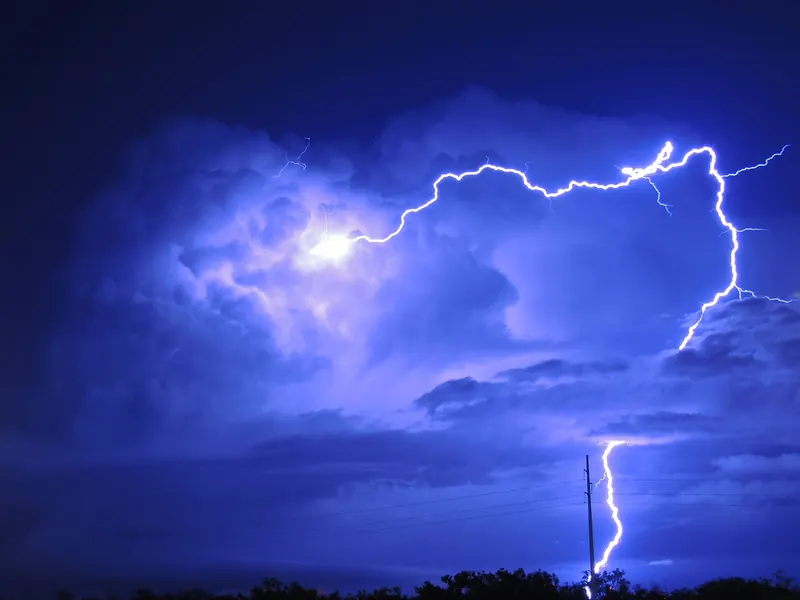
How far was that strike?
A storm is rolling past. Watch for the flash, count the seconds until the thunder arrives, then work out how far away the lightning was. Five flashes, a storm to track, and real physics: the thunder arrives at the true speed of sound for the air temperature you pick. Turn your sound on. No sound? Watch for the BOOM on screen instead.
How it works: Count the seconds from the flash to the thunder. Divide by five for the distance in miles, or by three for kilometres. Met Office: Thunder and lightning The game sends the thunder at NOAA’s speed-of-sound table for the temperature you choose, so cold air makes the gap a little longer. A sharp crack or click means the lightning channel passed nearby. A rumble means it was at least several miles away. National Weather Service: Understanding thunder Our sounds are simplified: real thunder depends on the whole storm. Distances, timings and the storm’s path are made up by the game each time. And for real storms: keep in mind that you should be in a safe place while counting. National Weather Service: Understanding thunder
The short version
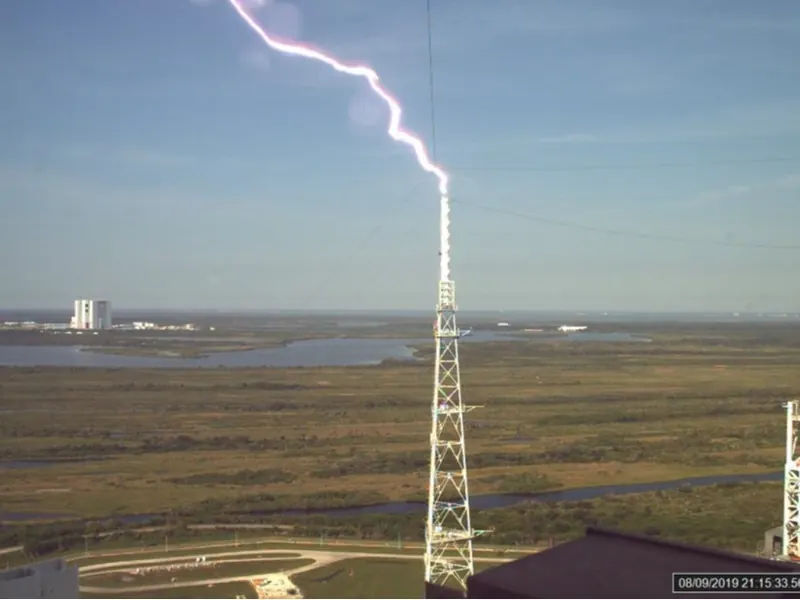
Lightning is a giant spark of electricity in the atmosphere, or between the atmosphere and the ground. National Weather Service: Lightning science overview
Most lightning, about 75–80%, happens inside the storm cloud itself. NOAA JetStream: How lightning is created
Thunder is the acoustic shock wave caused by the extreme heat of a lightning flash. NOAA JetStream: The sound of thunder The lightning and the thunder clap happen at the same time. You see the flash first because light is far faster than sound. Met Office: Thunder and lightning
When thunder roars, go indoors! National Weather Service: Lightning safety overview When you hear thunder, you are already within range of where the next ground flash may occur. Met Office: Stay safe in thunder and lightning
Explore lightning
 How lightning worksIce, hail, charge and a 2–3 cm-wide spark.
 Thunder & distanceWhy you see it first, and how to count the gap.
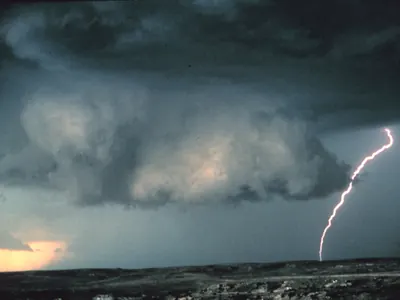 Staying safeWhere to go, what to avoid and the 30-minute rule.
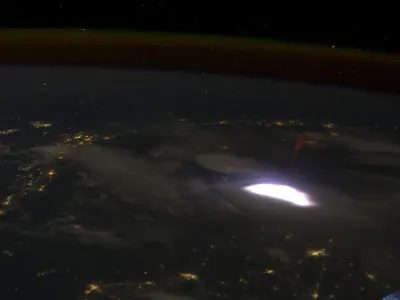 Types of lightningForked, sheet, bolts from the blue and red sprites.
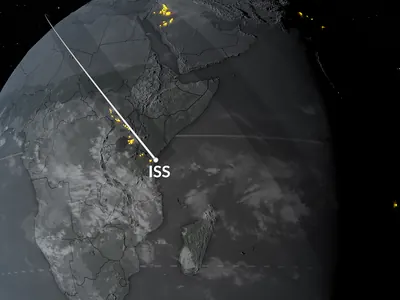 Around the worldThe lightning capital, the UK, and lightning seen from space.
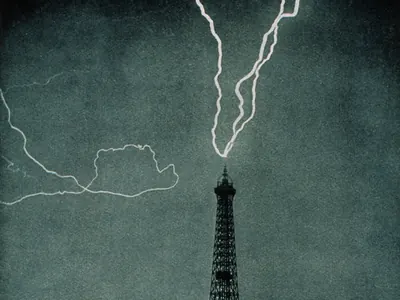 Myths vs factsSame place twice? Rubber tyres? Franklin’s kite?
Tile images are credited on their pages and on the credits page.
Things to play
- How far was that strike?Count the flash-to-bang gap, guess the distance and track the storm.
- Storm Safety DashReal situations, twelve seconds each. Pick the safe choice before the storm arrives.
- Lightning QuizTen questions at a time. Every answer comes with its source.
- Lightning PairsA memory game with real NOAA and NASA pictures.
Enjoying the storm? Help keep the lights on.
This site is hand-built, fact-checked and free to read. If a fact, a game or one of Useless’s notes made you smile, a little support keeps it going and helps the network grow.
Lightning printables
Fact-checked PDFs in A4 and US Letter, sold as instant downloads from the ReallyByte store.
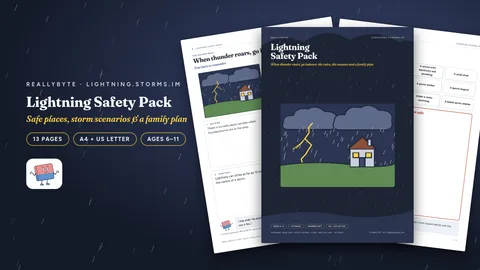
Lightning Safety Pack
Safe-or-not sorting, indoor and outdoor storm scenarios, myth busters, a family storm plan, a 30-minute countdown and a certificate, with answer keys
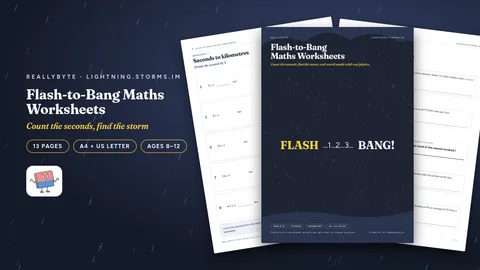
Flash-to-Bang Maths Worksheets
Count-and-divide distance problems in kilometres and miles, a speed-of-sound table, a storm tracker and answer keys
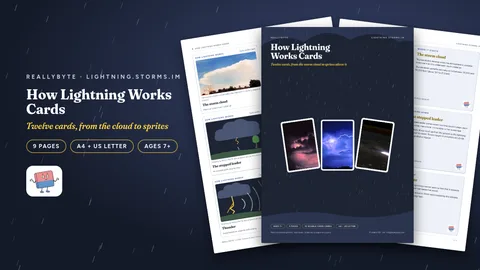
How Lightning Works Cards
Twelve double-sided cards, from charge in the cloud to the thunder you hear, plus a put-it-in-order game
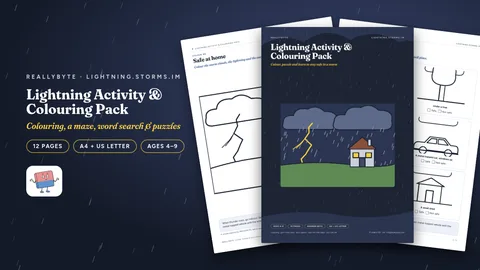
Lightning Activity & Colouring Pack
Colouring scenes, a get-indoors maze, word search and puzzles for ages 4 to 9
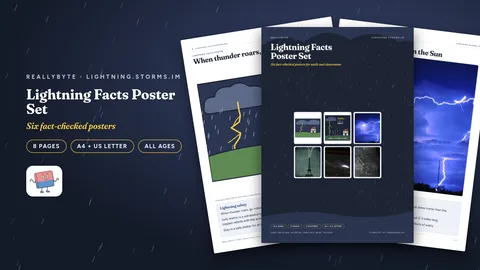
Lightning Facts Poster Set
Six fact-checked posters, from flash-to-bang to the Eiffel Tower struck in 1902
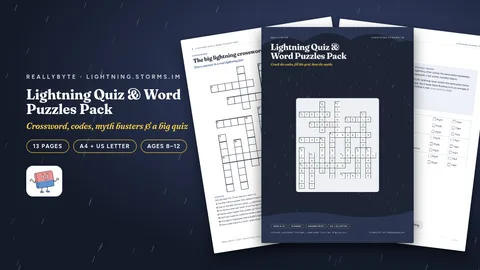
Lightning Quiz & Word Puzzles Pack
A crossword, code breaker, fill-the-gap facts, number match, myth busters and a 16-question quiz, with answer keys
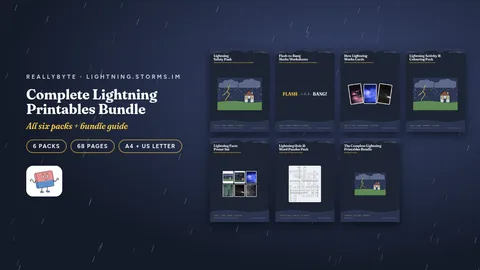 Best value
The Complete Lightning Printables Bundle
All six packs plus a guide, A4 and US Letter, in one download.