Things everybody “knows” about lightning
Same place twice, rubber tyres, and a famous kite. Gently corrected.
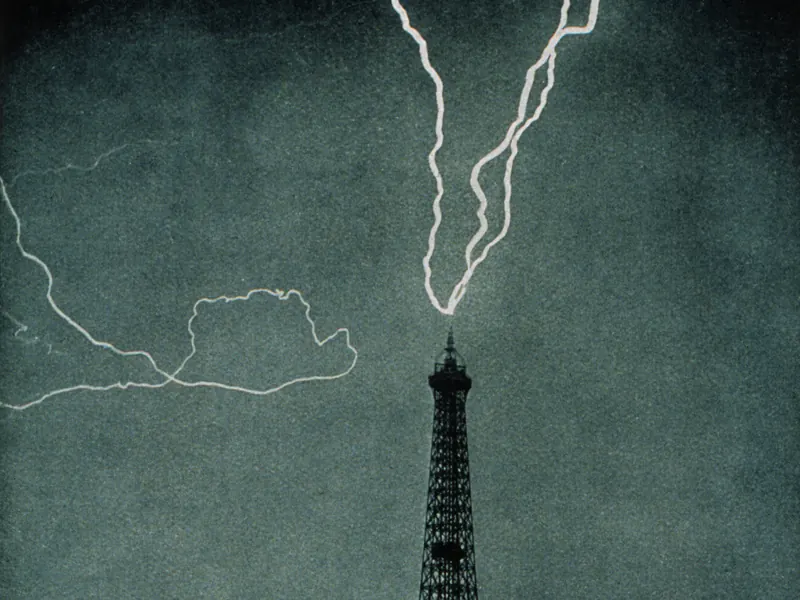
Myth Lightning never strikes the same place twice.
Fact Myth: lightning never strikes the same place twice. Fact: the Empire State Building is hit an average of 23 times a year. National Weather Service: Lightning myths · checked 27 Oct 2026 Lightning often strikes the same place repeatedly, especially a tall, pointy, isolated object. National Weather Service: Lightning myths
Myth Metal attracts lightning.
Fact Myth: metal attracts lightning. Fact: the presence of metal makes absolutely no difference to where lightning strikes. National Weather Service: Lightning myths Conduction: metal doesn’t attract lightning, but it gives the current a path, through metal wires, plumbing or metal surfaces. National Weather Service: How people are struck by lightning
Myth Rubber tyres or rubber-soled shoes protect you.
Fact Myth: rubber tyres or rubber-soled shoes protect you. Fact: rubber soles and rubber tyres are not insulators. NOAA JetStream: Lightning safety Do a car’s rubber tyres protect you if you’re outside, leaning on it? No! It’s the hard metal roof and sides that protect people inside. National Weather Service: Lightning and cars
Myth If it isn’t raining, you’re safe.
Fact Myth: if it isn’t raining, you’re safe. Fact: “bolts from the blue” can strike 10–15 miles from the thunderstorm. National Weather Service: Lightning myths Most people struck by lightning each year are in rain-free areas, miles from the thunderstorm. NOAA JetStream: Lightning safety
Myth Lightning victims stay “charged”, so don’t touch them.
Fact Myth: lightning victims are “charged”. Fact: the human body does not store electricity. It’s perfectly safe to touch a lightning victim. National Weather Service: Lightning myths Lightning victims do not carry an electrical charge and are safe to touch. National Weather Service: Lightning safety overview
Myth Lying flat on the ground is safest.
Fact Myth: lying flat is safer. Fact: lying flat increases your chance of being affected by deadly ground current. National Weather Service: Lightning myths
Myth Benjamin Franklin’s kite was struck by lightning.
Fact Benjamin Franklin’s kite was never struck by lightning! NOAA JetStream: Lightning safety
Myth The next flash will strike close to the last one, within 3–4 km.
Fact Myth: lightning flashes are 3–4 km apart. Fact: new data shows half the flashes are about 9 km apart. National Weather Service: Lightning myths
Myth Heat lightning is a special kind of lightning with no thunder.
Fact You might see lightning and not hear the thunder because the storm is too far away. This is sometimes called “heat lightning”, because it happens most often in summer. NOAA NSSL: Lightning FAQ
Myth You can have thunder without lightning.
Fact Can you have thunder without lightning? No. Thunder is caused by lightning. NOAA NSSL: Lightning FAQ
Myth Lightning rods stop lightning hitting a building.
Fact Lightning rods don’t stop lightning striking a building. They intercept the strike and give it a safe path to the ground. National Weather Service: Lightning rods