Types of lightning
Inside the cloud, down to the ground, out of a clear sky, and far above the storm.
In the cloud, or to the ground
Lightning between charges inside the storm cloud is intra-cloud lightning. Lightning between the cloud and the ground is cloud-to-ground lightning. National Weather Service: Lightning science overview
Most lightning, about 75–80%, happens inside the storm cloud itself. NOAA JetStream: How lightning is created
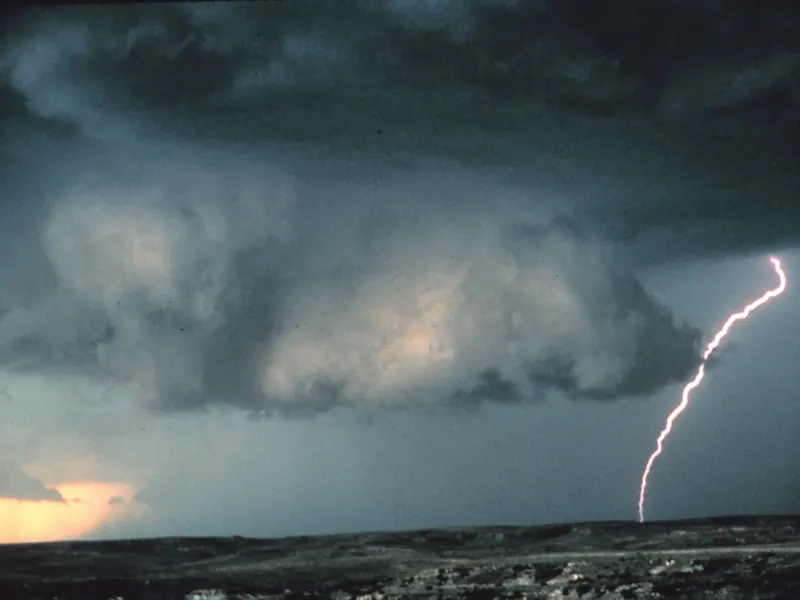
The Met Office list
The Met Office lists forked, sheet, streak, ribbon, rocket and pearl-necklace lightning among its types. Met Office: Thunder and lightning Pearl-necklace lightning is also called “chain lightning” or “beaded lightning”. Met Office: Thunder and lightning
Positive lightning
Positive lightning makes up less than 5% of all strikes, according to NOAA JetStream. NOAA JetStream: The positive and negative side of lightning The National Weather Service says about 10% of lightning flashes are positive flashes. National Weather Service: Positive flashes
Positive lightning can carry as much as 300,000 amperes and one billion volts. NOAA JetStream: The positive and negative side of lightning
A bolt from the blue
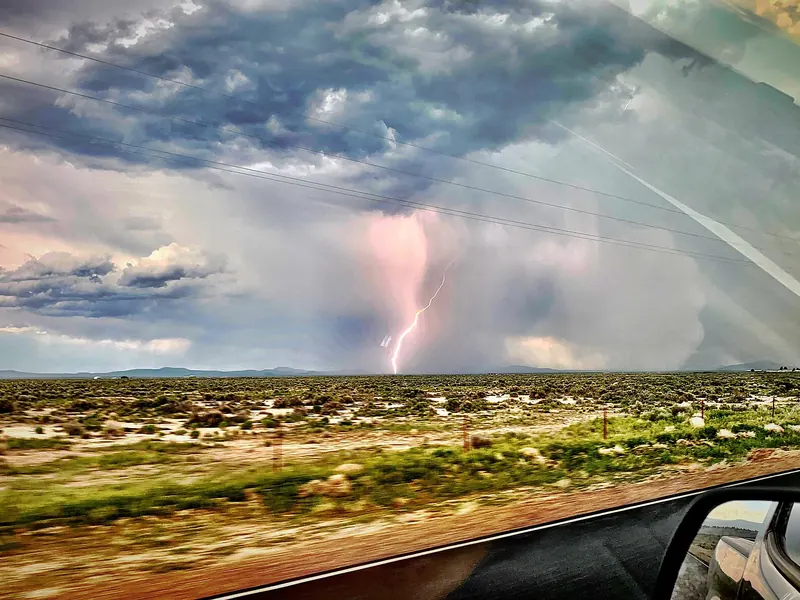
A “bolt from the blue” is a cloud-to-ground flash that comes out of the side of a storm and can strike far from it. NOAA NSSL: Lightning FAQ
Myth: if it isn’t raining, you’re safe. Fact: “bolts from the blue” can strike 10–15 miles from the thunderstorm. National Weather Service: Lightning myths Lightning detection equipment has confirmed bolts striking almost 50 miles away. NOAA JetStream: Lightning FAQ
NSSL describes a “bolt from the blue” that struck a cyclist about 16 km (around ten miles) from the storm. NOAA NSSL: Lightning FAQ
“Heat lightning”
You might see lightning and not hear the thunder because the storm is too far away. This is sometimes called “heat lightning”, because it happens most often in summer. NOAA NSSL: Lightning FAQ
Dry lightning
Dry lightning is lightning with no rain nearby. It’s more likely to start forest fires. NOAA NSSL: Lightning FAQ
Lightning strikes ignite more than half of the acreage burned by wildfires in the US. NOAA NESDIS: Geostationary Lightning Mapper · checked 27 Oct 2026
Colours
In snowstorms, pink and green are often described as colours of lightning. NOAA NSSL: Lightning FAQ
Above the storm
Sprites flash 25–45 miles (40–75 km) above storms, and elves even higher, at 60–250 miles (100–400 km). Both are often red. NOAA JetStream: The positive and negative side of lightning
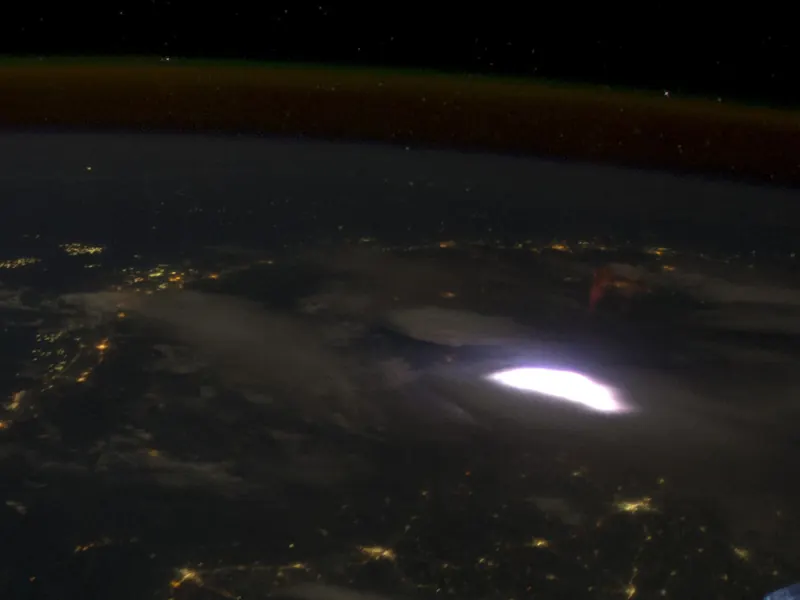
In this cropped view the sprite shows as a pale glow above the cloud tops.
Next: around the world →